
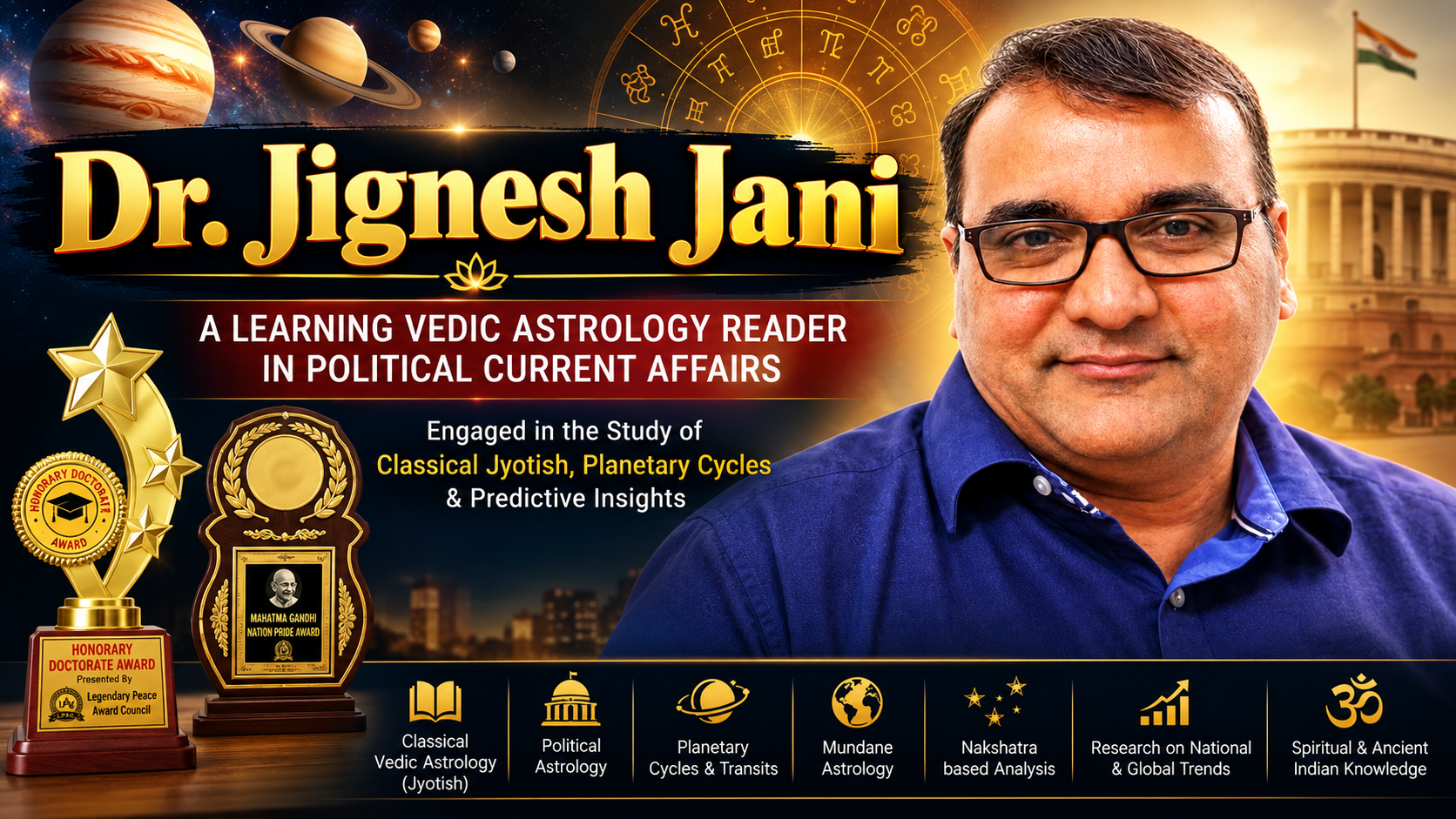
Ahmedabad, July 10: Vedic astrology researcher Dr. Jignesh Jani has shared his insights on the symbolic role of Jupiter in traditional Vedic astrology, explaining that the planet is widely regarded as a representation of wisdom, ethics, justice, education, and diplomacy. According to Dr. Jani, many Vedic astrologers believe Jupiter serves as a balancing influence during periods of global uncertainty by symbolically encouraging dialogue, responsible leadership, and peaceful conflict resolution.
Discussing the current international environment, Dr. Jani noted that the ongoing Mars–Rahu conjunction (Angarak Yoga) is traditionally associated with assertive energy, strategic decision-making, and heightened geopolitical activity. He also referred to the Saturn–Neptune alignment, which many astrological traditions interpret as symbolizing institutional restructuring, ideological transitions, changing alliances, and evolving global power dynamics.
While these planetary configurations are often discussed within traditional astrology, Dr. Jani emphasized that they should not be interpreted as scientifically established predictions of wars, political decisions, or military outcomes. Instead, he explained that Vedic astrology offers a symbolic framework for understanding collective cycles and encouraging thoughtful reflection on global developments.
According to Dr. Jani, Jupiter occupies a unique place in Vedic astrology because it represents values that remain essential in modern international relations. These include ethical leadership, justice, mutual respect, diplomacy, and constructive communication. He believes these principles are particularly important at a time when nations face economic uncertainty, geopolitical tensions, technological transformation, and evolving international partnerships.
“Jupiter reminds us that wisdom and diplomacy are often the strongest tools for resolving complex international challenges,” Dr. Jignesh Jani said. “While astrology may provide symbolic insights into collective trends, the future ultimately depends on the decisions made by governments, international institutions, and world leaders committed to peace.”
Dr. Jani further encouraged readers to appreciate Vedic astrology within its traditional and cultural context while relying on factual geopolitical analysis for understanding current affairs. He concluded by expressing hope that continued diplomatic engagement, international cooperation, and responsible leadership will help strengthen global stability, reduce conflict, and create opportunities for sustainable development and long-term peace.